
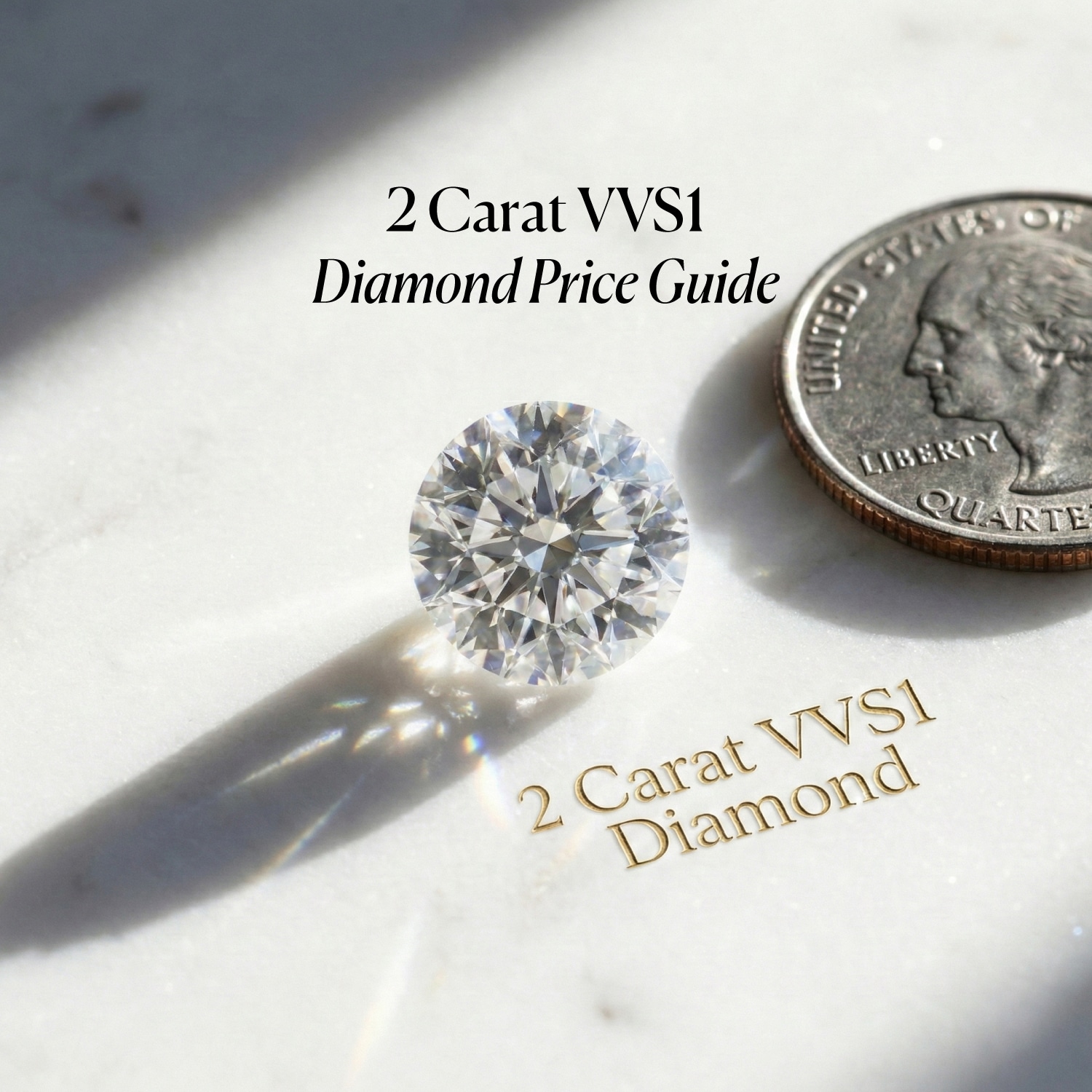
The “Arbitrage” Snapshot
- The Bottom Line (Feb 2026 Data): The price of a 2-carat VVS1 diamond is currently split between two parallel universes. A Natural 2ct VVS1 ranges from $25,290 (for G-Color) to a staggering $54,920 (for D-Color/Investment Grade).
Meanwhile, Lab-Grown 2ct VVS1 prices have bottomed out, with Ritani offering inventory as low as $1,505, while James Allen (GIA Certified) sits around $3,250. - The Massive Gap: The price arbitrage is so extreme that you can now buy thirty-six (36) Lab-Grown 2.00ct D-VVS1 diamonds for the cost of just one Natural 2.00ct D-VVS1 stone.
- Smart Money Move: If your heart is set on a Natural stone, the biggest win is dropping your color requirement from D ($54k) to G ($25k). You save $29,000 instantly while keeping the elite VVS1 clarity.
Deal Alert: Mother’s Day Sale Up To 30% Off* select fine jewelry at Blue Nile.
New Collection: Shop the James Allen Collection at Blue Nile.
Vault Sale: “Clear The Vault” – Get up to 70% OFF at Blue Nile!
Flash Sale: Save up to 40% OFF sitewide at Rare Carat.
Exclusive: Get up to 60% OFF select fine jewelry at Ritani.
To find the absolute floor of the market, compare live pricing with our Best Places to Buy Lab Grown Diamonds ranking.
In the high-stakes world of diamonds, “VVS1” (Very Very Slightly Included) is the gold standard for buyers who demand perfection. It represents a stone where internal flaws are so microscopic that even a trained gemologist struggles to find them under 10x magnification.
However, in 2026, the cost of that “perfection” depends entirely on where the diamond was born. In a Natural Diamond, VVS1 perfection costs as much as a luxury SUV. In a Lab Diamond, it currently costs less than a mid-range MacBook Pro.
Mehedi’s Reality Check: “I have the live inventory feeds from Blue Nile and Ritani open on my screen right now, and frankly, the data is broken. We are at a point in history where two stones can look 100% identical to the human eye, yet carry a $50,000 price tag difference.
If you aren’t looking at the latest 2026 price matrix, you aren’t just overpaying—you’re being left behind by a market that has fundamentally shifted.”
In this guide, we are going beyond the marketing fluff. We are breaking down the Natural vs. Lab and GIA vs. IGI pricing structures to show you exactly where the value is hiding.
Before you commit: If you’re looking at a $40,000 price tag, take a breath and read our Natural vs Lab Diamond $15,000 Budget analysis to see just how far your money can truly go in today’s market.
Diamond IQ Test: Natural or Lab-Grown?
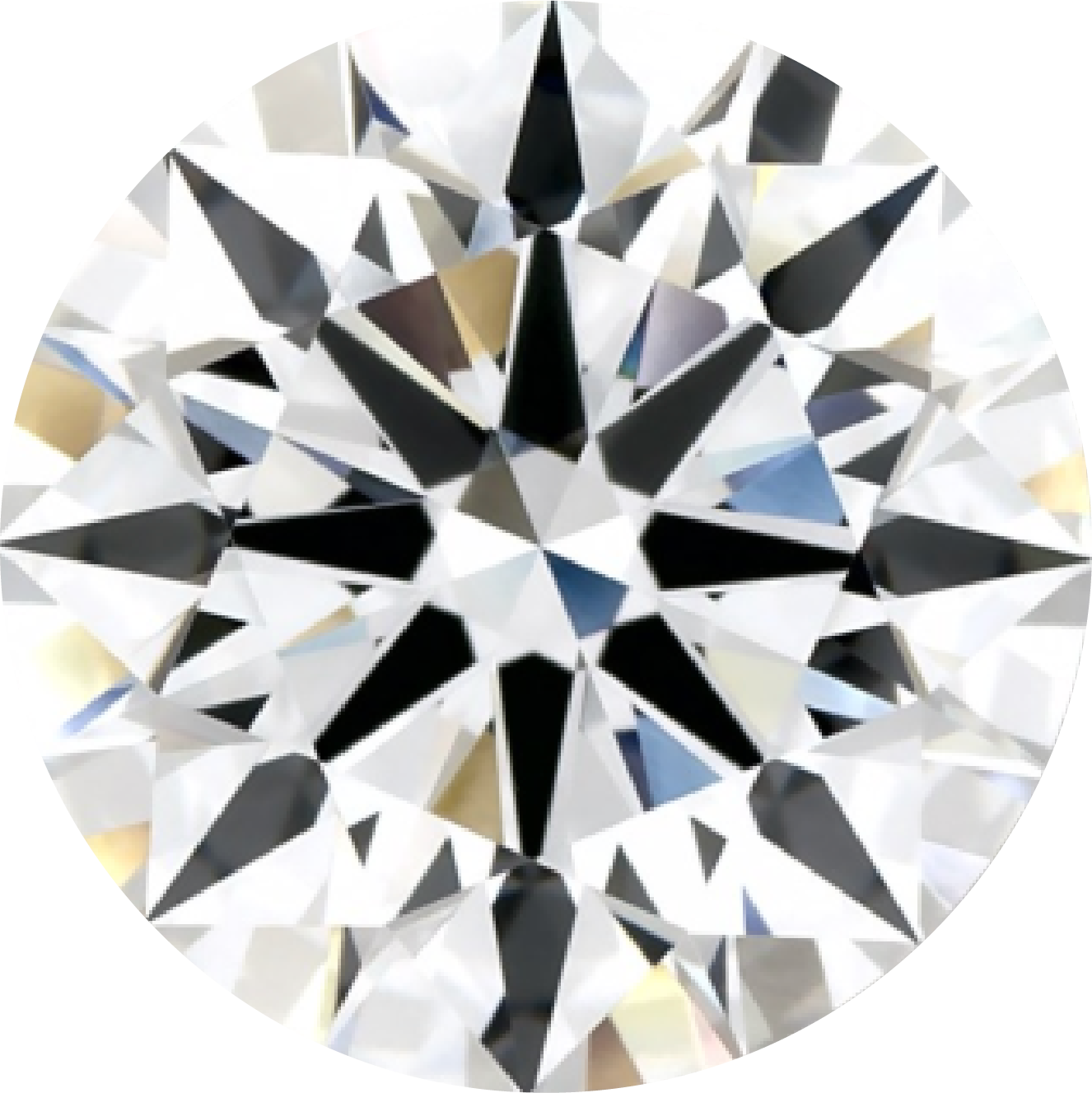
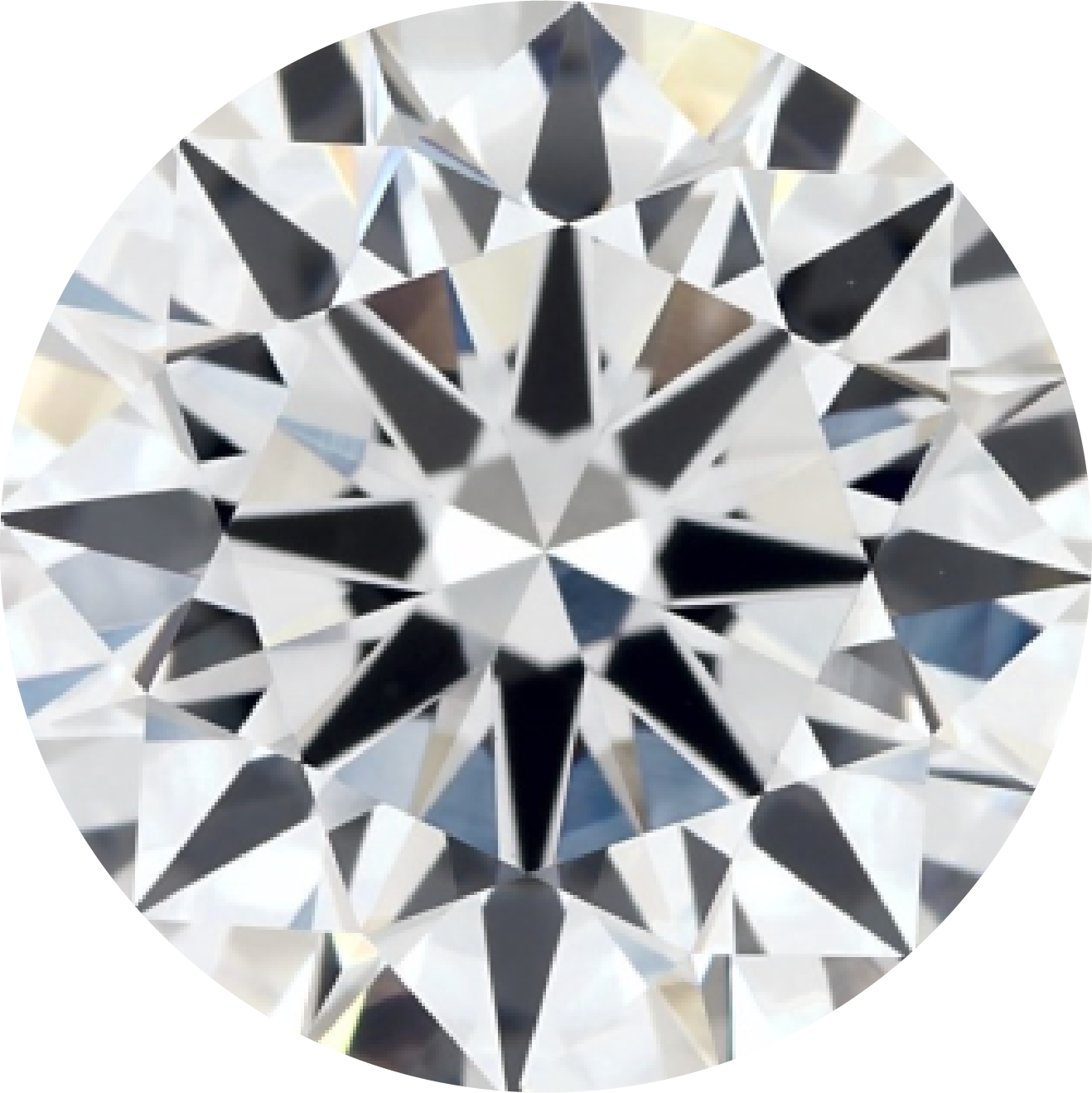
Two identical diamonds: GIA Certified, 1.51ct, D Color, VVS1, Ideal Cut. One is natural ($16,240), the other is lab-grown ($1,970). Choose the diamond you like better and see if you can match it to its origin.
The $50,000 Gap: Natural VVS1 Price Matrix
When you cross the 2.00-carat threshold in natural diamonds, you aren’t just buying a stone; you are entering the realm of global commodities. Because 2-carat rough crystals are significantly rarer than 1-carat ones, the price jumps are no longer linear—they are exponential.
In this weight class, VVS1 clarity is the ultimate “safety net” for high-end buyers, but as the data shows, it’s the Color Grade that truly dictates how much of your savings you’ll be sacrificing.
2 Carat Natural VVS1 Prices
We pulled the live February 2026 inventory from Blue Nile, the undisputed leader in high-end natural diamond transparency. Every diamond in the table below is a GIA-certified 2.00-carat (or slightly higher) Round Brilliant with an Excellent Cut and VVS1 Clarity.
The goal here is to expose the “Color Premium”—the massive amount of money you pay for a lack of tint that is physically impossible to see with the naked eye.
The Cost of Natural “Ice” (2ct Round VVS1)
| GIA Grade | Color | Cut Quality | February 2026 Price | The “Vanity Tax” | Mehedi’s Expert Verdict |
|---|---|---|---|---|---|
| Benchmark | G Color | Excellent | $25,290 | Baseline | The Smart Buy. Looks pure white on the hand. Zero wasted money. |
| Near Colorless | E Color | Excellent | $27,060 | +$1,770 | Great value for an “E” grade. A logical upgrade if you want “Colorless” status. |
| The Mid-Tier | G Color | Excellent | $30,450 | +$5,160 | Higher premium due to Super Ideal proportions. |
| High Tier G | G Color | Excellent | $34,620 | +$9,330 | Overpaying for a brand name or vendor “cut score.” |
| The “Paper Queen” | D Color | Excellent | $39,750 | +$14,460 | The Psychological Trap. You are paying $14k for a letter on a PDF. |
| The “Collector” | D Color | Excellent | $41,200 | +$15,910 | For those who only care about the certificate brag. |
| The Outlier | D Color | Excellent | $54,920 | +$29,630 | The 3,500% Markup. This is pure insanity. Avoid at all costs. |
| The 2026 Reality Verdict: The price of “D Color” isn’t based on beauty; it’s based on ego. Sticking to the $25,290 G-Color stone saves you nearly $30,000. | |||||
Mehedi’s Analysis: “Look closely at the numbers. Moving from G ($25,290) to D ($39,750) is purely a psychological exercise. Once these diamonds are set in a platinum or white gold ring, you cannot distinguish between them.
You are paying a $14,000 vanity tax for a single letter on a GIA report. If you have $40,000 to spend, buy the G-color stone and spend the extra $15k on a 2-carat diamond ring for your other hand—you’d still have change left over.”
Why D-Color Costs $29,000 More Than G-Color
In a 2-carat stone, the surface area is large enough that “Color” becomes a pricing lever. However, the VVS1 diamond meaning & cost remains constant across these grades.
- The Rarity Factor: D-color, VVS1 natural diamonds are “statistical unicorns.” Only a fraction of mined diamonds are both colorless and essentially flawless.
- The “Magic Number” Premium: At exactly 2.00 carats, every tiny spec—from color to clarity—is priced at a premium because it hits a major consumer psychological milestone.
- The Setting Hack: If you set a G-color diamond in a White Gold or Platinum setting, the metal’s coolness bleeds into the stone, making it look like a D or E anyway.
Scaling Down? The 1-Carat Perspective
If these numbers are giving you sticker shock, you aren’t alone. In our 1 carat VVS1 diamond price guide, we showed that the price floor for a natural stone is closer to $5,000. Jumping to 2 carats doesn’t just double the price; it quintuples it.
Before you commit to spending $50,000, make sure you understand the difference between D Color Diamond vs G Color Diamond—it is the most expensive lesson you will ever learn in jewelry.
The $1,505 Floor: Lab VVS1 Price Matrix
While the natural diamond market is reeling from the 2.00-carat rarity premium, the lab-grown market has entered a state of pure price war.
In 2026, the cost to grow a high-quality, 2-carat VVS1 crystal has dropped so significantly that retailers are now fighting for the “bottom of the barrel” price point.
However, not all lab diamonds are priced equally—the retailer you choose and the piece of paper (certificate) attached to the stone can double your cost instantly.
2 Carat Lab VVS1 Prices (Ritani vs. James Allen)
The 2026 trend is clear: Lab prices are crashing, but dealers are taking two very different approaches to pricing. Ritani has become the “Low Baller” of the industry, operating on razor-thin margins and transparent costs.
James Allen, meanwhile, maintains a premium “Service Tier,” charging more for their superior 40x SuperZoom technology and their inventory of GIA-certified lab stones.
The 2026 Lab “Price War” (2ct D-VVS1)
| Retailer | Certification | 2.00ct Cut Quality | February 2026 Price | Mehedi’s Value Analysis |
|---|---|---|---|---|
| Ritani (Floor) | IGI | Ideal | $1,505 | The Market Killer. Unbeatable floor price. Best for budget maximizers. |
| Ritani (Value) | IGI | Ideal | $1,572 | Standard competitive inventory. |
| Ritani (Upper) | IGI | Ideal | $2,063 | Higher-quality “Make” (better proportions/angles). |
| Ritani (Tier) | IGI | Ideal | $2,623 | Top-percentile performance. |
| James Allen | GIA | Excellent | $3,250 | The GIA Tax. You pay for the certificate brand name. |
| James Allen | GIA | Excellent | $3,610 | Premium stone with 40x video verification. |
| James Allen | IGI | Ideal | $3,910 | High Markup. High-end IGI from a premium brand. Hard to justify vs Ritani’s $1,505. |
| The 2026 Price Verdict: The numbers are shocking. You can buy two 2.00ct diamonds from Ritani for the price of one from James Allen. If you don’t need the 40x video technology, Ritani is the undeniable financial winner. | ||||
The $53,415 Arbitrage: Natural vs. Lab
To put this into perspective, look at the “Top Spec” natural stone versus the market floor for lab:
Mehedi’s Reality Check: “You are looking at a 3,500% price difference. For the cost of one Natural 2.00ct D-VVS1, you could literally buy thirty-six of the Ritani stones.
If you aren’t an ‘Asset Collector’ looking for a geological hedge, there is no technical or visual reason to bridge that $53,000 gap.”
Why is James Allen $1,700 More Expensive?
You’ll notice that James Allen ($3,250) is consistently more expensive than Ritani ($1,505) for the same D-VVS1 specs.
- The GIA Certified Tax: GIA charges more to certify a lab stone than IGI does. That cost is passed directly to you.
- Superior Tech: James Allen’s 40x SuperZoom allows you to see “Growth Strain” (hazy lines) that cheaper sites might hide.
- The “Safe” Buy: Many buyers are willing to pay the extra $1,700 for the peace of mind that comes with a James Allen Review—they have the best customer service and settings in the business.
If you are looking for the absolute lowest price on the planet, Ritani is the winner. But before you buy, make sure you know the trade-offs: Is Ritani Legit? vs. the premium experience of James Allen.
Deal Alert: Ritani’s current promotions offer exceptional value.
Discount applied automatically
Shop Lab Diamonds | Shop Settings| Pro Tip: Ritani offers price matching and free shipping.
Shape Shifting: Fancy Cuts & VVS1
While the Round Brilliant is the undisputed king of light performance, it is also the most expensive shape to produce. In the natural diamond market, shifting to a “Fancy Shape” (anything not round) is a classic strategy to save money.
However, in 2026, the logic changes when you look at Lab-Grown stones, where the cost of production is more uniform across silhouettes.
VVS1 Pricing by Shape (Emerald, Princess, Marquise)
The “Shape Tax” is real, but it affects Natural and Lab diamonds differently. For Natural Diamonds, the price is driven by how much “rough” is lost during cutting.
For Lab Diamonds, the price is driven more by consumer trends and the complexity of the “seed” used for growth.
The Logic: When VVS1 is Mandatory vs. Overkill
- Emerald Cuts: VVS1 is critical. Because Emerald cuts are “step-cuts” with large, open tables (windows), they do not hide inclusions. A lower clarity grade like SI1 will be immediately visible.
- Princess & Round: VVS1 is often overkill. These “Brilliant” cuts use hundreds of tiny facets to scatter light, which naturally hides inclusions from the naked eye.
2-Carat VVS1 Shape Price Matrix (2026 Data)
| Diamond Shape | Stone Type | Grading Lab | Color | Price | The Shape Strategy |
|---|---|---|---|---|---|
| Princess Cut | Natural | GIA | F | $28,170 | Saves $7,000+ vs. a Round F-VVS1. |
| Princess Cut | Lab Grown | GIA | D | $4,120 | Premium GIA-lab square cut. |
| Emerald Cut | Lab Grown | GIA | D | $3,600 | The Best Value for a 2ct step-cut. |
| Marquise Cut | Natural | GIA | D | $48,090 | Extreme rarity; highest price per carat. |
| Marquise Cut | Lab Grown | GIA | D | $3,650 | The Arbitrage Winner. You save $44,400 (92%) by choosing Lab. |
| The 2026 Buying Verdict: The numbers are undeniable. Buying a Natural Marquise at $48k is financial suicide when the Lab-Grown version ($3,650) exists. This is the single largest price gap in the entire diamond market. | |||||
The Marquise “Miracle” ($44,000 Savings)
Look closely at the Marquise Cut Diamond pricing. In the natural world, a D-VVS1 Marquise is $48,090 because finding a large, colorless rough stone suitable for this long shape is a geological miracle.
In the lab world, we can “program” the growth to favor this shape, resulting in a price of just $3,650.
Mehedi’s Tip: “If you want the ‘Elite’ look of a 2-carat Marquise but don’t want to spend the price of a mid-sized SUV, this is where Lab-Grown technology wins. You save $44,000 and get the exact same chemical structure.”
The Emerald Cut “Window”
If you are following our Emerald Cut Diamond buying guide, you know that clarity is your #1 priority. Because the 2.02ct D-VVS1 Lab Emerald is priced at $3,600, it is the smartest way to get a “hall-of-mirrors” effect without the risk of visible inclusions.
In natural stones, an Emerald cut of this quality would easily push past $35,000.
Mehedi’s Verdict: “Buying a Natural Princess Cut is a great way to save money compared to Rounds. But for Lab-Grown stones, the price variation between shapes is actually quite small. If you’re going Lab, buy the shape you love, not the one that’s cheapest.”
Technical Specs: Why “VVS1” is the Safe Zone
In the world of 2-carat diamonds, “Clarity” is often the most misunderstood of the 4Cs. Many buyers believe that a higher clarity grade equals a more “brilliant” diamond. In reality, clarity is simply a measure of how clean the stone is under a microscope.
By the time you reach VVS1, you aren’t paying for extra sparkle—you are paying for the privilege of a “clean” certificate.
Do You Actually Need VVS1? (Visual Test)
To understand the price gap, you have to understand the difference between “Eye-Clean” and “Microscope-Clean.”
- VS1 (Very Slightly Included): These diamonds are 100% “Eye-Clean.” This means that to the naked eye, there are zero visible inclusions. You would need a professional 10x jeweler’s loupe and several minutes of searching to find the tiny pinpoint that defines this grade.
- VVS1 (Very Very Slightly Included): These stones are “Microscope-Clean.” Even a trained gemologist using a microscope will struggle to find the inclusion. It is essentially the closest thing to perfection you can buy without paying the “Flawless” (FL) premium.
The Mehedi Advice: Lab vs. Natural Strategy
The “Smart Buy” strategy for 2026 is completely different depending on whether you are going Lab or Natural:
For Lab-Grown: BUY VVS1. Why? Because the price difference is negligible. In the Ritani and James Allen inventory we analyzed, the jump from a VS1 to a VVS1 is often only ~$100 to $200. When you are already saving $50,000 compared to a natural stone, there is no reason to compromise. Secure the “Collection Quality” grade and get the best paper possible.
For Natural: AVOID VVS1. This is where your budget goes to die. In the natural market, every step up the clarity ladder is a financial hurdle.
- GIA 2.00ct G-VVS1 (Blue Nile): $25,290
- GIA 2.00ct G-VS2 (Estimated): ~$18,000 The Verdict: By dropping from VVS1 to VS2, you save $7,000 instantly. Since both stones look identical on the finger, that $7k is better spent on a higher color grade or a more elaborate setting.
The “Mind Clean” Premium
Ultimately, the VVS1 diamond meaning & cost is about psychological satisfaction. If you are the type of person who will always know there is a microscopic flaw in your stone, then VVS1 is your “Safe Zone.” It provides peace of mind.
However, if you want the most “bang for your buck,” I always recommend reading our deep dive on VS1 vs VS2 diamond comparisons.
For a 2-carat natural stone, a well-selected VS1 is the ultimate “Sweet Spot”—it’s half the price of a VVS1 but offers the exact same visual performance.
Certification: GIA (Natural) vs IGI (Lab)
In the 2-carat market, the logo at the top of your diamond certificate isn’t just a signature; it’s a price multiplier.
While the GIA (Gemological Institute of America) is the undisputed “Gold Standard” for natural stones, the IGI (International Gemological Institute) has carved out a massive niche as the “Lab Standard” for 2026.
Why GIA Costs More on Lab Diamonds
If you look at the price difference between James Allen ($3,250) and Ritani ($1,505) for a D-VVS1 lab diamond, you might wonder if the James Allen stone is physically “twice as good.” The answer is usually found in the paperwork.
James Allen’s inventory for this tier is heavily GIA-certified, while Ritani’s floor inventory is predominantly IGI-certified.
The 2026 Certification Price Gap (2ct Lab Grown)
| Certification | Market Role | Typical 2ct D-VVS1 Price | Grading Strictness |
|---|---|---|---|
| GIA | The Premium Authority | $3,250 – $3,610 | Extreme (The “Strict” Graders) |
| IGI | The Lab Specialist | $1,505 – $2,200 | Industry Standard / Efficient |
| EGL/Other | Budget/Fringe | Under $1,200 | Avoid. Grading is loose and unreliable. |
| The 2026 Lab Verdict: For Lab-Grown diamonds, paying the GIA premium is unnecessary overhead. IGI Certification is the global standard for this market. Save the $1,500 and put it into a platinum setting instead. | |||
The $1,700 Question: Is GIA Better?
As a GIA-trained gemologist, I’ll be honest: Yes, a GIA report is technically more prestigious. But is it $1,700 better for a lab-grown stone? In 2026, for a 2-carat engagement ring, the answer is usually no.
- The Cutter’s Cost: A GIA report for a lab stone costs the cutter between $100 and $150, plus the insurance and shipping to GIA’s few global labs.
- The “Strict” Factor: GIA is notoriously conservative. A GIA “D” color is a true, icy D. An IGI “D” color might occasionally look like a GIA “E” in a side-by-side comparison.
- The Holding Cost: GIA takes roughly 3-4 weeks to grade a stone, whereas IGI operates with high-speed efficiency (often 48-72 hours). Dealers pay interest on the money tied up in those diamonds while they sit at GIA, and that cost is passed on to you.
Mehedi’s Expert Take: “In the natural market, you never buy without a GIA cert—it’s your financial protection. But at the $1,500 lab-grown price point, the IGI certificate is the industry standard. Paying a 100% premium just for the GIA logo on a man-made diamond is a poor use of capital.
You aren’t buying an investment; you’re buying a piece of jewelry. Trust the IGI for the lab stone and save that $1,700 for the honeymoon.”
If you’re curious about how other labs stack up, especially when dealers try to push “discount” certificates that sound official but aren’t, check out my deep dive into GIA vs EGL Certification to see why we still strictly avoid the fringe labs even in a low-price market.
FAQs
Buying a 2-carat diamond is a major milestone, but it’s also where the industry’s “hidden taxes” are most aggressive. In 2026, the traditional playbook for buying diamonds is obsolete.
I’ve compiled these 15 high-stakes questions to give you the exact technical and financial data you need to bypass the marketing traps.
Conclusion: Mehedi’s “Buy or Pass” Verdict
We have looked at the hard data, the certifications, and the 3,000% price gap. Now, here is my final recommendation as your “friend in the business.”
When the market offers you identical visual beauty for $1,505 or $54,920, you don’t just “buy a diamond”—you make a financial decision.
Here is exactly how I would spend my own money in February 2026:
- PASS: The GIA Natural 2.00ct D-VVS1 ($54,920).
- Why? Unless you are a multi-millionaire collector needing a place to park cash, this is a waste of capital. You are paying a $29,000 premium purely for the letter “D” and the letter “E” on a piece of paper. Once set in a ring, no one can see that money.
- Why? Unless you are a multi-millionaire collector needing a place to park cash, this is a waste of capital. You are paying a $29,000 premium purely for the letter “D” and the letter “E” on a piece of paper. Once set in a ring, no one can see that money.
- BUY (Natural): The GIA Natural 2.00ct G-VVS1 ($25,290).
- Why? This is the sweet spot. It faces up white, has the prestige of a Natural GIA stone, and saves you enough money to buy a car compared to the D-Color option. It retains value better than lower grades because high-clarity stones are always liquid.
- Why? This is the sweet spot. It faces up white, has the prestige of a Natural GIA stone, and saves you enough money to buy a car compared to the D-Color option. It retains value better than lower grades because high-clarity stones are always liquid.
- BUY (Lab – The “Steal”): The Ritani IGI 2.00ct D-VVS1 ($1,505).
- Why? This is the greatest arbitrage opportunity in the luxury market today. You get the exact same specs as the $54k stone—perfect Color, perfect Clarity—for the price of a generic wedding band. Visually, it wins. Financially, it wins.
Final Word: Inventory at these specific price points moves fast. What is $1,505 today might be $1,800 tomorrow as dealers adjust to demand.
Always crunch the numbers for your specific budget using our Diamond Rate Calculator before you swipe that card. Do not overpay.